
Digital marketing is the practice of promoting a business, product, service, or personal brand through digital channels such as search engines, websites, social media, email, and online advertising. For beginners, the difficult part isn’t finding information—it’s knowing what to learn first and how to turn that knowledge into practical skills.Digital Marketing for Beginners
You don’t need to master SEO, Google Ads, social media, email marketing, analytics, and content creation at the same time. A better approach is to understand the fundamentals, choose one area, practice it on a real project, and expand your skills gradually.
This guide explains the main areas of digital marketing and provides a practical seven-step roadmap for beginners.
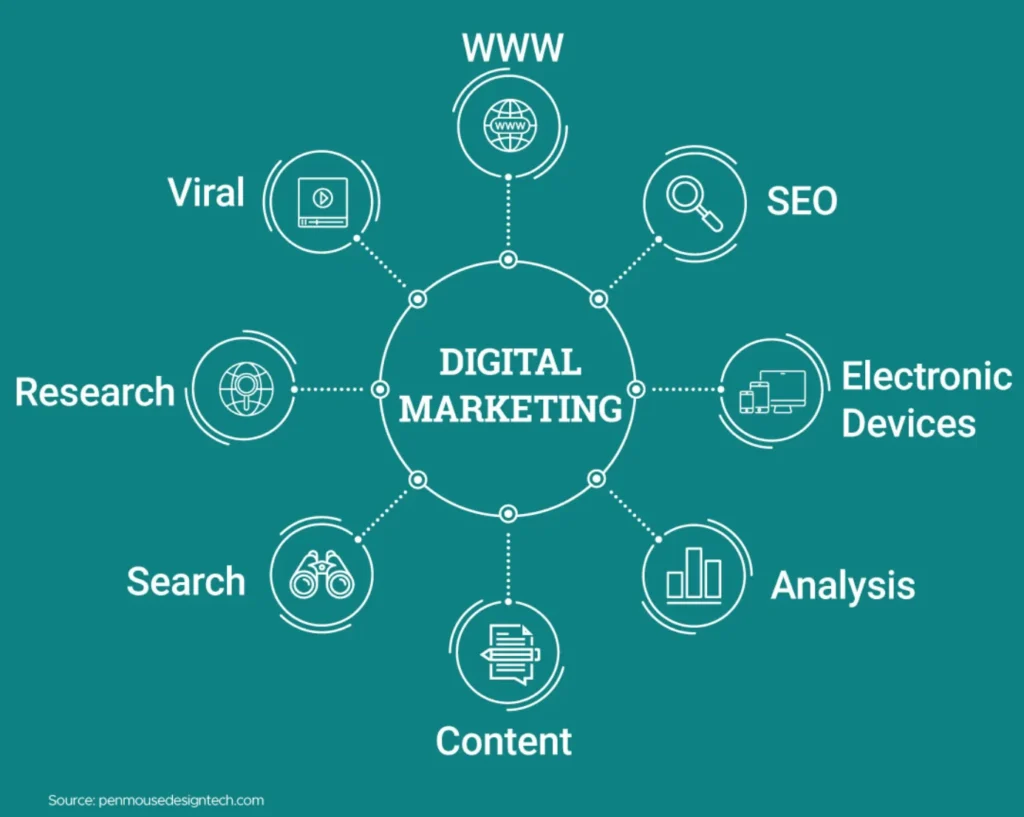
What Is Digital Marketing?
Digital marketing is the use of digital channels and technologies to reach potential customers, communicate with them, and encourage actions such as visiting a website, signing up for a service, making a purchase, or contacting a business.
Common digital marketing channels include:
- Search engines
- Websites and blogs
- Social media
- Online advertising
- Video platforms
- Mobile apps
- Content platforms
For example, imagine a small skincare business launching a new sunscreen. It might publish an SEO article about choosing SPF, post educational videos on social media, collect email subscribers, and run paid advertisements.
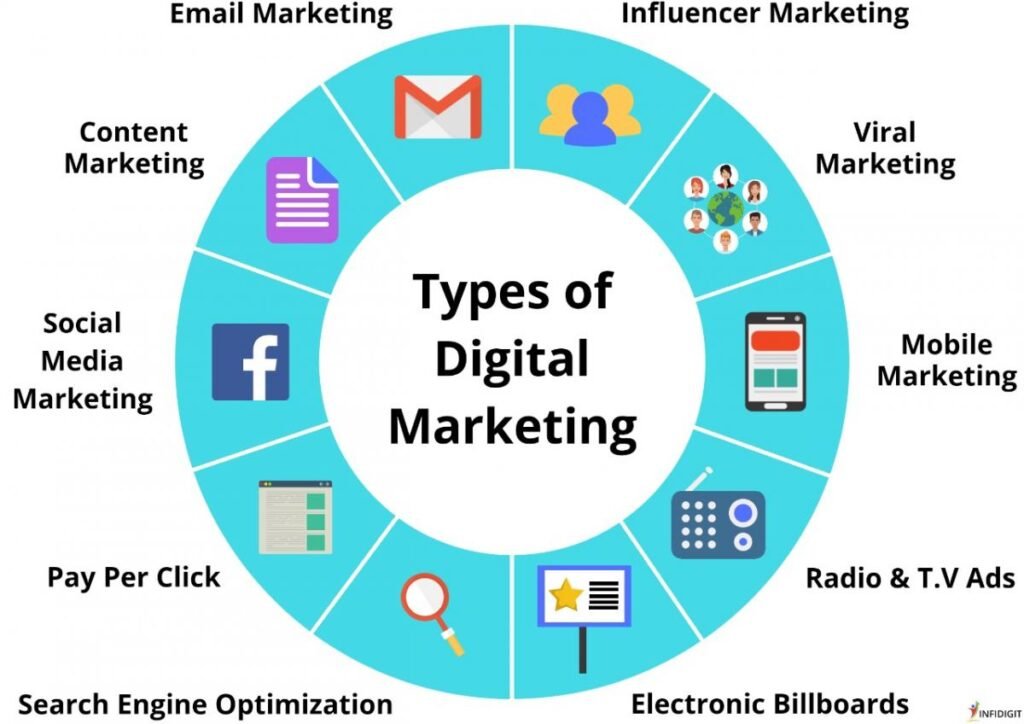
Those activities are different tactics, but they can all work toward the same business goal.
That is an important point for beginners: digital marketing is not one skill. It is a group of related skills used to achieve a marketing objective.
Why Is Digital Marketing Important?
Customers increasingly use digital channels to discover information, compare products, research businesses, and communicate with brands. That gives businesses opportunities to reach people at different stages of the buying journey.
Digital marketing can help a business:
- Increase online visibility
- Reach a specific audience
- Generate leads
- Build brand awareness
- Drive website traffic
- Increase sales
- Communicate with existing customers
- Measure marketing performance
One major advantage over many traditional marketing methods is measurability. A marketer can monitor actions such as clicks, website visits, leads, conversions, and advertising costs.
However, measurement alone does not make a campaign successful. A business still needs a useful offer, a clear audience, good messaging, and a sensible strategy.
7 Essential Steps for Digital Marketing Beginners
1. Learn the Fundamentals of Marketing First
Before learning individual platforms, understand how marketing works.
Start with basic concepts such as:
- Target audience
- Customer needs
- Buyer persona
- Value proposition
- Marketing funnel
- Customer journey
- Conversion
- Call to action
- Return on investment

These concepts apply across different digital channels.
For example, suppose you want to promote an online English course. Before creating an Instagram campaign, you should know who the course is for. Is the audience school students, university students, professionals, or people preparing for an English test?
The answer affects your content, advertising message, keywords, platform choice, and offer.
This is why learning marketing fundamentals before becoming obsessed with tools is useful.
2. Choose One Digital Marketing Skill
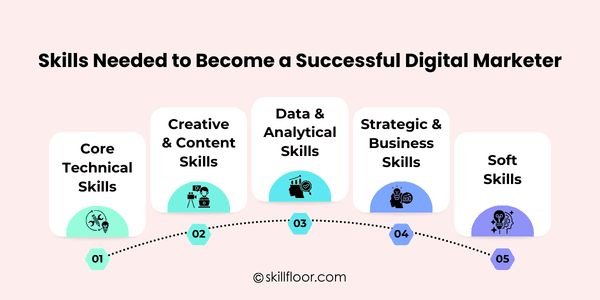
One of the biggest mistakes beginners make is trying to learn everything at once.
A search for digital marketing skills quickly produces a long list: SEO, PPC, social media, email marketing, copywriting, analytics, content marketing, video marketing, and more.
Digital Marketing for Beginners
That can make the field feel much harder than it actually is.
Instead, choose one starting point.
SEO
SEO helps websites earn visibility in organic search results. It involves keyword research, useful content, on-page optimization, technical considerations, internal linking, and other practices.
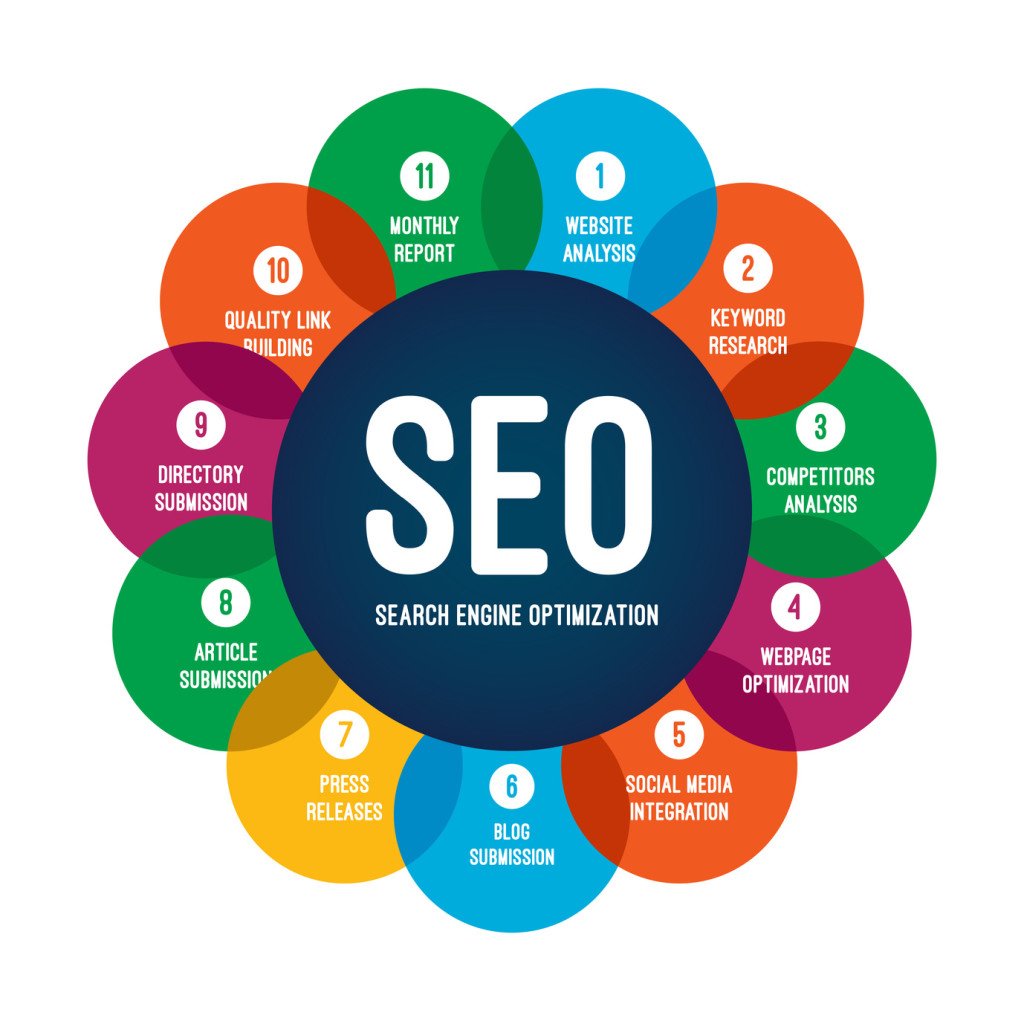
SEO can be a good choice if you enjoy writing, research, and analyzing search behavior.
Content Marketing
Content marketing focuses on creating useful material for a particular audience.
Examples include:
- Blog posts
- Guides
- Videos
- Tutorials
- Case studies
- Social posts
This can be a good starting point for people who enjoy writing or creating educational material.
Social Media Marketing
Social media marketing involves using platforms such as Instagram, Facebook, LinkedIn, TikTok, and others to build awareness and engagement.
It can involve content planning, community management, creative development, analytics, and paid campaigns.
Email Marketing
Email marketing involves communicating with subscribers through newsletters, promotional emails, educational sequences, and other messages.
It is particularly useful for businesses that want to maintain relationships with existing leads and customers.
Paid Advertising
Paid advertising includes search and social advertising platforms. It can provide quicker feedback than organic strategies, but beginners should understand budgeting, targeting, tracking, and conversion measurement before spending significant amounts of money.
You don’t need to decide your permanent career path on day one. Your first skill is simply a starting point.
3. Practice Instead of Only Watching Tutorials
This is where many beginners get stuck.
You can watch dozens of videos about SEO and still struggle to optimize a real article. You can read about social media strategy and still not know how to create a content calendar.
Knowledge becomes useful when you apply it.
Create a small practice project.

For example, choose an imaginary business such as:
Business: Online skincare store
Then practice:
- Identify its target customer.
- Research relevant keywords.
- Create five blog topics.
- Write one SEO article.
- Create a one-week social media calendar.
- Write a sample promotional email.
- Define how you would measure the results.
You now have something much more useful than a collection of notes: a practical example of your marketing thinking.
Recent beginner discussions frequently point toward the same lesson—practice and real projects matter because beginners often struggle to move from learning concepts to actually implementing them. (Reddit)
4. Learn Keyword Research and Search Intent
Digital Marketing for Beginners
If you choose SEO or content marketing, keyword research should be one of your early skills.
A keyword is a word or phrase that someone enters into a search engine.
For example:
Broad keyword:
Digital marketing
More specific keyword:
Digital marketing for beginners
Long-tail keyword:
How to learn digital marketing for beginners
The longer phrase gives you more information about what the searcher wants.
But search volume is not the only thing that matters.
You should also consider search intent.
A person searching for:
“What is digital marketing?”
probably wants information.
Someone searching for:
“Best digital marketing course”
may be comparing options.
Someone searching for:
“Digital marketing agency near me”
has a very different intent and may be looking for a service provider.
Understanding this difference helps you create content that actually satisfies the searcher’s purpose.
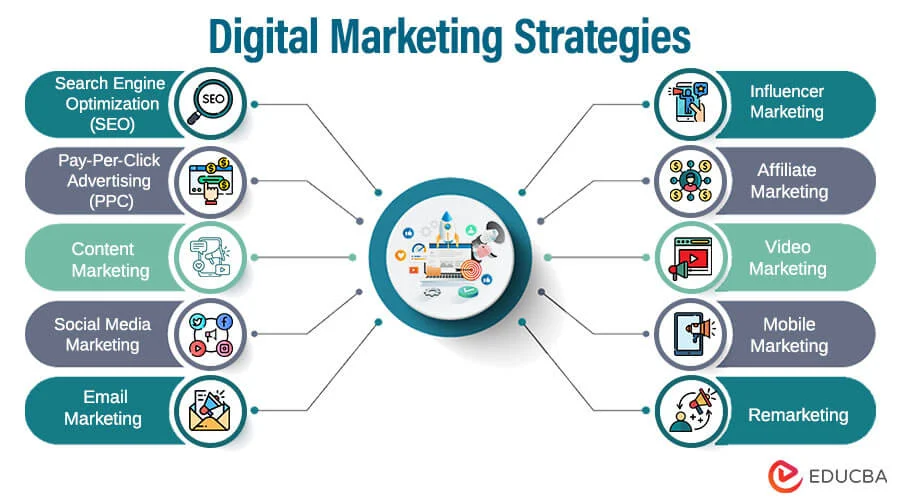
5. Understand How Digital Marketing Channels Work Together
Beginners often think they have to choose between SEO, social media, email, and advertising.
In reality, these channels can support each other.
Imagine a company publishes a useful blog article.
The company could:
SEO: Optimize the article for relevant searches.
Social media: Share the article with its followers.
Email: Send the article to subscribers.
Paid advertising: Promote the article to a relevant audience.
Conversion: Invite visitors to sign up for a newsletter or request more information.
One piece of content can therefore become part of a larger marketing system.
This is more useful than treating every channel as an isolated activity.
6. Learn Analytics and Measurement
Digital marketing involves more than creating content and publishing advertisements. You also need to understand whether your work is producing the desired result.
Depending on the campaign, useful metrics may include:
- Website traffic
- Click-through rate
- Engagement
- Leads
- Conversion rate
- Cost per click
- Cost per lead
- Sales
- Return on advertising spend
The correct metric depends on the objective.
For example, if your goal is brand awareness, impressions and reach may be relevant. If your goal is sales, revenue and conversion-related metrics become much more important.
A common beginner mistake is celebrating traffic without asking whether the traffic is useful.
Getting 10,000 visitors sounds impressive, but if none of them are interested in the product, the traffic may have limited business value.
Good marketers connect activity to outcomes.
7. Build a Portfolio Before You Feel “Ready”
You do not necessarily need a long employment history to demonstrate digital marketing skills.
Create examples of your work.
Your beginner portfolio could include:
- SEO articles
- Keyword research
- Content calendars
- Social media posts
- Email campaigns
- Sample advertising campaigns
- Website audits
- Competitor research
- Analytics reports
You can create a project around a fictional company if you don’t yet have a client.
For example, create a complete marketing plan for a fictional online clothing store. Explain the audience, keywords, content strategy, social media plan, email sequence, and measurement strategy.
A portfolio gives employers or clients something concrete to evaluate.
What Are the Main Types of Digital Marketing?
Digital marketing includes several major areas.
Search Engine Optimization
SEO focuses on improving a website’s visibility in organic search results.
Important areas include keyword research, content quality, on-page SEO, internal linking, technical SEO, and user experience.
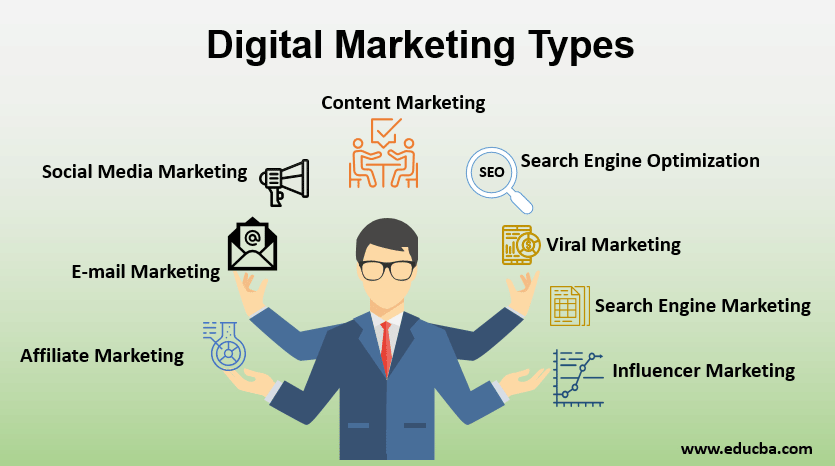
Content Marketing
Content marketing uses useful information to attract and retain an audience.
The content should have a purpose rather than simply filling a website with articles.
Social Media Marketing
Social media marketing uses social platforms to build awareness, engagement, community, and sometimes direct sales.
Email Marketing
Email marketing allows businesses to communicate with people who have chosen to receive messages from them.
Pay-Per-Click Advertising
PPC involves paid advertising where advertisers typically pay based on clicks or other defined actions, depending on the platform and campaign.
Affiliate Marketing
Affiliate marketing involves promoting another company’s products or services and earning a commission when qualifying referrals result in a specified action.
Influencer Marketing
Influencer marketing involves collaborating with creators who have an audience relevant to a brand or product.
The strongest partnership is not necessarily the one with the largest follower count. Audience relevance and trust matter too.
How Can Beginners Learn Digital Marketing?
A simple learning path looks like this:
Month 1: Fundamentals
Learn marketing concepts, target audiences, customer journeys, basic terminology, and digital marketing channels.
Month 2: Choose a Skill
Focus on SEO, content, social media, email, or paid advertising.
Month 3: Practice
Create a real or sample project and apply what you have learned.
Month 4: Measure
Learn basic analytics and evaluate your project.
Month 5 and Beyond: Build
Create additional projects, improve your portfolio, and begin applying for internships, jobs, freelance opportunities, or small client projects.
The exact timeline is not important. Consistent practice is.
Current beginner discussions also show that people frequently recommend choosing one channel first rather than trying to master every area simultaneously. (Digital Marketing for Beginners)
Common Digital Marketing Mistakes Beginners Should Avoid
Trying to Master Everything
Digital marketing is too broad to master overnight.
Start with one area and expand gradually.
Focusing Too Much on Tools
Tools can make marketing easier, but knowing where to click is not the same as understanding marketing.
Learn the reason behind the action.
Copying Competitors
Competitor research is useful, but copying another website’s content or strategy rarely creates a strong long-term advantage.
Study competitors to identify opportunities, weaknesses, and unanswered questions.
Ignoring the Audience
A campaign should begin with the customer rather than the platform.
Ask:
Who am I trying to reach?
What problem do they have?
What information do they need?
What action should they take?
Expecting Instant Results
SEO and organic content often require time. Paid campaigns can produce faster data, but fast data does not guarantee profitable results.
Set realistic expectations and evaluate performance based on meaningful objectives.
Learning Without Practicing
This is perhaps the most important mistake.
If you spend months consuming tutorials without creating anything, your knowledge may remain theoretical.
Create something.
Test it.
Measure it.
Improve it.
That cycle builds real skill.
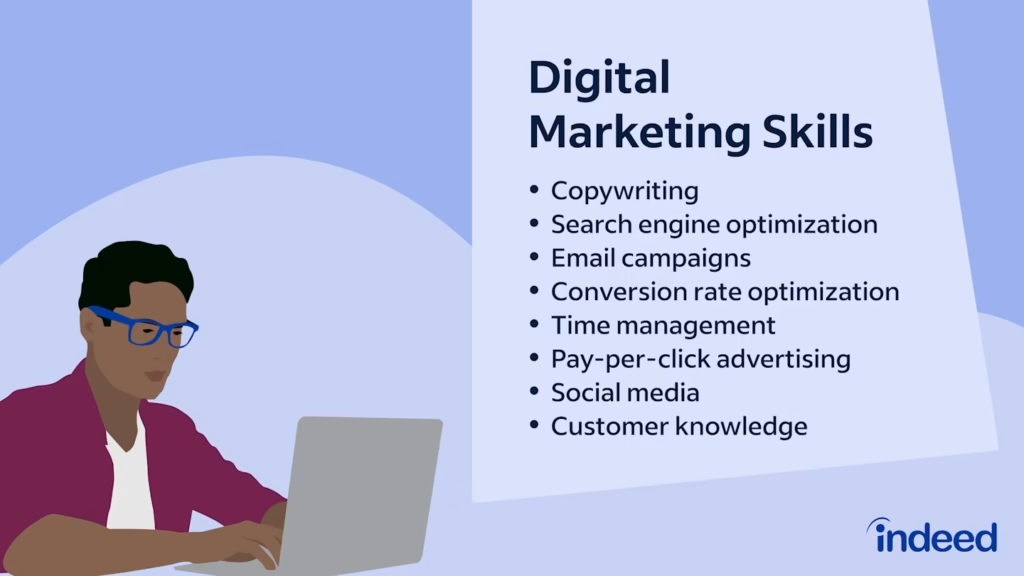
What Skills Do Digital Marketers Need?
A good digital marketer does not need to be an expert in every tool. More valuable skills include for Digital Marketing for Beginners
Communication
You need to explain ideas clearly to customers, clients, managers, and team members.
Writing
Writing is useful across SEO, email, social media, advertising, landing pages, and content marketing.
Research
Digital marketers need to research audiences, competitors, keywords, products, industries, and customer problems.
Analytical Thinking
Marketing decisions should be based on evidence rather than assumptions whenever useful data is available.
Creativity
Creative thinking helps marketers develop better content, campaigns, offers, and messaging.
Adaptability
Digital platforms change regularly. A skill that works today may need to be adjusted tomorrow.
Can You Build a Career in Digital Marketing?
Yes. Digital Marketing for Beginners
can lead to several different career paths.
Potential roles include for Digital Marketing for Beginners
- SEO specialist
- Content writer
- Content marketer
- Social media manager
- PPC specialist
- Email marketing specialist
- Digital marketing executive
- Marketing analyst
- Affiliate marketer
- Digital marketing consultant
You can work in-house for a company, join an agency, work as a freelancer, or eventually build your own business.
The important thing is to develop evidence of your ability. A portfolio showing what you can actually do can be more useful than simply saying that you have “knowledge of digital marketing.”
A Simple Beginner Digital Marketing Strategy
Digital Marketing for Beginners :If you want to practice
everything together, use this simple framework:
Step 1: Pick a Business
Choose a real or fictional business.
Step 2: Define the Audience
Write down who the business wants to reach.
Step 3: Identify a Problem
Find a question or problem that the audience has.
Step 4: Create Content
Create an article, video, social post, or guide that addresses the problem.
Step 5: Choose a Distribution Channel
Decide whether SEO, social media, email, or paid advertising is appropriate.
Step 6: Add a Call to Action
Tell the audience what they can do next.
Step 7: Measure the Result
Decide what success means and track an appropriate metric.
Step 8: Improve
Use what you learned to make the next campaign better.
This process teaches you more than simply memorizing definitions.
Frequently Asked Questions
What is digital marketing for beginners?
Digital marketing for beginners is the process of learning how businesses use online channels such as search engines, websites, social media, email, content, and paid advertising to reach and convert customers.
Can I learn digital marketing without a degree?
Yes. A marketing degree can be useful, but many digital marketing skills can be developed through courses, practical projects, personal websites, internships, freelance work, and portfolio projects.
What should learn first in Digital Marketing for Digital Marketing for beginners
Start with basic marketing concepts and then choose one core area, such as SEO, content marketing, social media marketing, email marketing, or paid advertising. Trying to learn everything at once can make the process unnecessarily confusing.
How long does it take to learn digital marketing?
The basics can be learned relatively quickly, but becoming proficient takes ongoing practice. Your progress depends on the skill you choose, how much time you dedicate to learning, and how often you work on real projects.
Is SEO a good skill for Digital Marketing for
beginners?
SEO can be a strong starting point for beginners who enjoy writing, research, websites, and data. It also teaches useful concepts such as search intent, keyword research, content optimization, and audience behavior.
Can I learn digital marketing for free?
Yes. Many educational resources, platform documentation, tutorials, and free learning materials are available online. However, free resources work best when you combine learning with practical projects rather than simply watching tutorials.
Can digital marketing be a freelance career?
Yes. Freelancers can offer services such as SEO, content writing, social media management, email marketing, advertising management, and analytics. A clear service offering and practical portfolio can make it easier to demonstrate your value to potential clients.
What is the biggest mistake Digital Marketing for
beginners make?
Trying to learn every digital marketing channel before practicing any of them is one of the most common problems. Choose one area, build something, measure the result, and then expand your skills.
Final Thoughts
Digital marketing can look complicated because it includes so many platforms, tools, and strategies. But beginners do not need to learn everything at once.
Start with the fundamentals. Choose one skill. Practice it on a real project. Learn how to measure the outcome. Then build your portfolio and expand into related areas.
The goal isn’t to know the name of every marketing tool. The real goal is to understand an audience, solve a problem, communicate a useful message, and measure whether your marketing actually worked.
That mindset gives you a much stronger foundation for building a digital marketing career or growing a business online.
